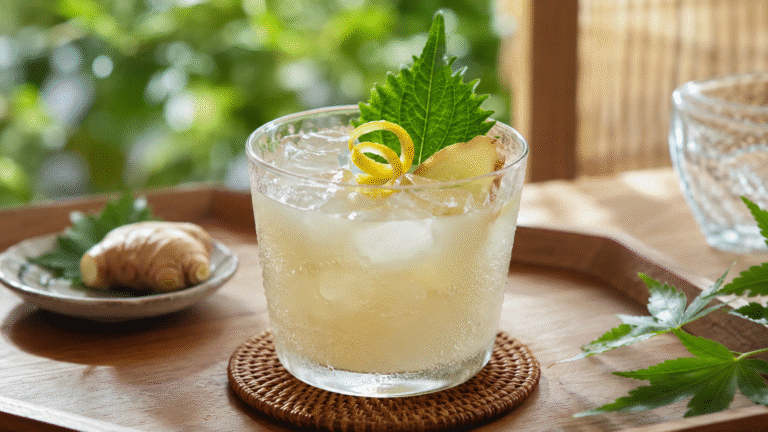
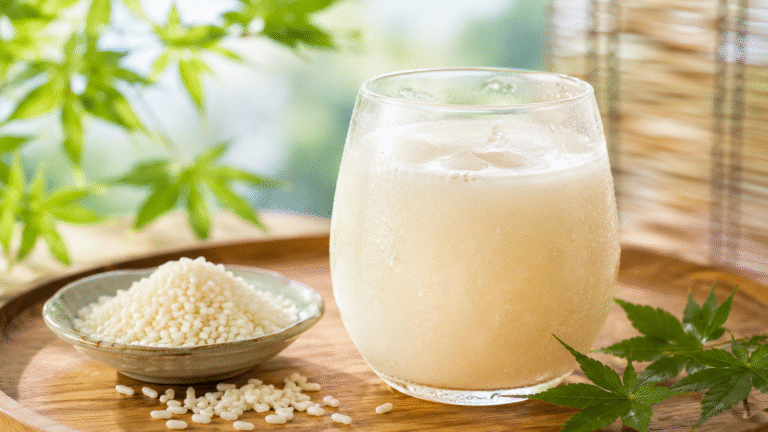
When people see the word amazake, they often focus on the final part: sake.
Surely it must be alcoholic?
Not necessarily.
Amazake literally means “sweet sake,” but its history, production, and place in Japanese life are quite different from the sake poured at a bar. It is a traditional fermented rice drink with a gentle sweetness, creamy texture, and a history stretching back more than a thousand years.
And although many people now associate it with cold winter days and New Year visits to shrines, amazake was traditionally a drink for summer.
How Is Amazake Made?
There are two main styles.
- Rice-koji amazake is made from cooked rice, rice koji, and water. Enzymes produced by the koji break the rice starch down into sugars, creating sweetness naturally. There is no alcoholic fermentation, so this style is generally alcohol-free and may be enjoyed by children when clearly labelled 0.00% alcohol.
- Sake-lees amazake is made by dissolving sake kasu—the lees remaining after sake production—in water, usually with added sugar. Because sake lees may retain a small amount of alcohol, children, pregnant women, and those avoiding alcohol should check the product label carefully.
One name, two very different drinks.
Japan’s “Drinkable IV”
Amazake is sometimes called nomu tenteki—“a drinkable IV.”
This is a popular nickname, not a medical claim. It refers to the drink’s combination of readily available glucose, amino acids, and nutrients such as B-group vitamins. The exact nutritional content depends on the ingredients and production method.
Its appeal is simple: amazake is sweet, satisfying, and easy to drink when the heat has taken away your appetite.
Serve it cold. Add ice. Blend it with fruit. Stir in ginger or yuzu.
Traditional does not have to mean unchanged.
Amazake from a Vending Machine
At JR Akihabara Station in Tokyo, a vending machine on the Sobu Line platform has attracted attention for offering several different kinds of amazake—at times, five varieties lined up side by side.
In the middle of one of Tokyo’s busiest technology districts, commuters can choose a chilled fermented rice drink from a machine.
It is wonderfully Japanese: ancient fermentation delivered through modern convenience.
Could Amazake Become a Cocktail?
Absolutely.
Amazake has natural sweetness, body, and a soft rice character, making it an interesting cocktail ingredient as well as a drink on its own.
It could be paired with:
- Yuzu, lemon, or sudachi for acidity
- Ginger, shiso, or Japanese pepper for freshness and spice
- Sparkling water for a light, alcohol-free serve
- Sake or shochu for a creamy, distinctly Japanese cocktail
Used carefully, amazake can replace part of the sugar syrup while adding texture and fermentation character.
Conclusion
Sweet, nourishing, and unexpectedly versatile. Kanpai.